











WASHINGTON (TNND) — The U.S. is creating a domestic stockpile of critical minerals in the Trump administration’s latest move to reduce the country’s reliance on China for key materials and components of technology used in cellphones, military equipment and renewable energy.
It is the latest move by the Trump administration to counter China’s tight grip over the world’s supply of critical minerals and the process to refine them that are at a constant risk of having access to restricted with major effects to consumer and military manufacturing.
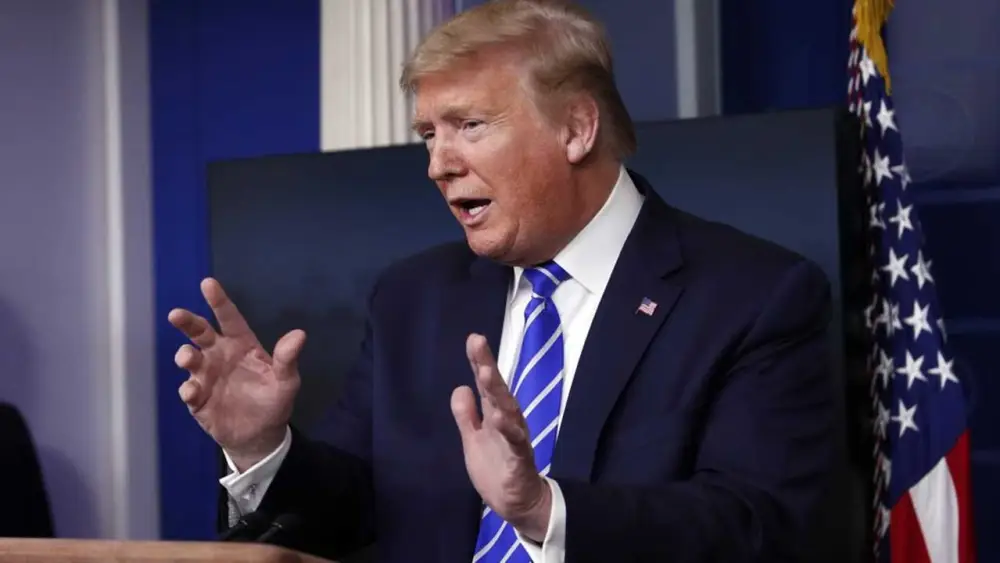
President Donald Trump announced a new $12 billion initiative on Monday to bolster the domestic supply of critical minerals, which aims to acquire and store them for American manufacturers. The president compared the project to the strategic petroleum reserve that has been utilized to minimize the blow from shocks to the global supply chain.
During last year’s trade dispute, China moved to cut off U.S. access to a handful of rare earths and magnets used to make semiconductors, batteries and other products. Those restrictions have since been suspended after meetings between Trump and Chinese leader Xi Jinping but remain a sticking point over ongoing trade discussions. In response to tariffs and tighter controls on technology exports, China also created a licensing systems giving it more control over rare earths beyond its borders.
Trump referenced those spats during the Oval Office announcement as a situation the White House is trying to avoid in the future.
“Just as we have long had a strategic petroleum reserve and a stockpile of critical minerals for national defense, we’re now creating this reserve for American industry, so we don’t have any problems,” Trump said. “We don’t want to ever go through what we went through a year ago.”
China accounts for 70% of the world’s mining for rare earths and 90% of the processing, giving it outsized control of a key piece to global manufacturing that can be weaponized in trade disputes. Of the 50 minerals designated by the Department of the Interior as being strategically critical, China is one of the largest producers of 30 of them.
The stockpile aims to create a buffer to protect companies from price shocks and shortages that could bring manufacturing to a standstill. The U.S. already has a smaller stockpile of critical minerals for defense manufacturing, while Project Vault would support other industries if China were to cut off access during a conflict or trade dispute. Companies like General Motors, Stellantis and Boeing have agreed to participate.
“You hope that it’s like a virtuous circle. If there is a bunch of gallium being produced, semiconductor manufacturers in the U.S. will say, ‘hey, I see some gallium here. I’ll buy that.’ And then more people want to produce gallium,” said Ian Lange, associate professor of economics and business at the Colorado School of Mines.
Trump has made finding alternative suppliers and increasing domestic production of critical minerals a priority since returning to office. He has agreed to deals with Ukraine and Australia to gain access to their supply of the materials and had sought to acquire Greenland in part because of its reserves. The U.S. has also taken financial stakes in several American rare earths and magnets companies to help compete with China.
Trump also signed an executive order last year using the Defense Production Act to increase the domestic production of critical minerals that includes identifying sites where production can take place, developing financing methods for projects and reducing environmental and permitting roadblocks.
The State Department is also hosting a ministerial meeting on critical minerals on Wednesday with Secretary of State Marco Rubio and Vice President JD Vance, where more bilateral agreements on the supply chain are expected to be signed.
“This historic gathering will create momentum for collaboration to secure these critical components vital to technological innovation, economic strength, and national security,” the department said in a release.
The resources are critical for modern manufacturing for things like radar systems, electric vehicles, laptops and phones. But it has been challenging for other countries to compete with China’s stranglehold on the industry. New mining and refining projects are expensive, require lengthy permitting processes, costly specialized equipment and a high-skill workforce.
“We have meetings where we hire consultants to write a report saying our supply chain is really China dependent and then when it comes to brass taxes, or when it comes to making the decision, it’s ‘never mind, too expensive’ or something,” Lange said.
The U.S. is decades behind China in building up its own capacity to mine and refine critical minerals and turning to government investments and taking stakes in private companies to bolster the domestic supply chain. The Trump administration has made a series of investments into private companies in mineral and magnet production. Among the deals are up to $1.3 billion in loans to USA Rare Earth Inc. and a $400 million stake for the Pentagon in MP Materials.
Part of the agreement with Australia included a provision where the governments will financially intervene if projects are not commercially viable to counter China’s ability to flood the market with materials to drive down prices and force competitors out of business.






