











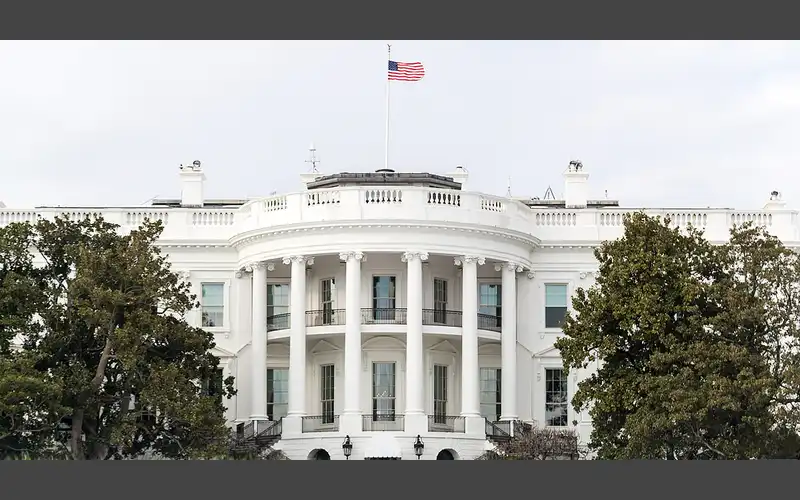
WASHINGTON, D.C. –The Republican-led U.S. House of Representatives narrowly passed legislation Tuesday to fund the majority of the government through the end of the fiscal year, while providing temporary funding to the Department of Homeland Security for the next two weeks. In the wake of two fatal shootings of protesters by federal agents in Minneapolis last month, Democrats demanded sweeping reforms in how DHS agencies handle immigration enforcement before they would approve full-year funding for the department. It’s not at all clear whether Republicans will agree to the changes their colleague across the aisle want, which Rep. Pete Aguilar (D-CA) summed up this way Tuesday:
“Democrats are joining the American people in demanding that federal immigration agents are held to the same standards as our local police officers. Our caucus is united in demanding four common-sense, reforms: body cameras must be required by law and masks must come off. Judicial warrants are a requirement, not a suggestion. We must have independent investigations to prosecute agents responsible for carrying out abuses. And finally, there needs to be clear guidelines on use of force. Democrats won’t rest until we enact real change in this lawless agency.”
At the same time, a handful of Republicans saw the must-pass funding package as perhaps their best opportunity to push through what they call an ‘election integrity’ bill. The SAVE Act, which the House has passed before but been unable to move through the Senate, would require voters in all states show proof of U.S. citizenship in order to be able to vote. Many red states already have such laws on the books while blue states do not, instead making the point that federal statute already prohibits noncitizens from voting in federal elections. Republicans in the House overwhelmingly support the SAVE Act but leadership opposed the idea of attaching it to the funding bill, primarily, because it would mean the entire bill would have to go back to the Senate where the 60-vote requirement would likely doom it and the shutdown would continue. In the end, President Trump and GOP leadership prevailed upon the few Republican holdouts to drop their objection and the bill funding bill passed 217-214.
Four of Oklahoma’s five House members voted for the funding package, while Rep, Josh Brecheen (R-OK2) voted no.
Rep. Stephanie Bice (R-OK5) spoke with Griffin Media’s Alex Cameron about her yes vote shortly after casting it:
BICE: “Certainly, we’ve been working for months now to try to responsibly fund government and we’ve been able to finally accomplish that. Certainly, the DHS appropriations bill is going to have to be reworked. We have about two weeks to get that done, but this is a real win for the country. It takes a lot of the policies that were under the Biden administration out of the appropriations process, it puts President Trump’s policies in place. And I want to give a huge shout-out to appropriator Tom Cole (R-OK4), the chair of the Appropriations Committee for, you know, really keeping us on track to get this across the finish line.”
…on whether she considered joining those who wanted to attach the SAVE Act to the bill:
BICE: “Absolutely not. You know, you have, members that wanted to attach the SAVE Act, which is a election integrity bill to the appropriations process. Those are very different things. You have a faction of the conference that has asked for what we would consider single subject bills — appropriations bills are single subject bills, they are all dealing with government funding; and the SAVE Act — which is very important, and I am a co-sponsor of, that deals with election integrity — is not part of the discussion. And so, I want to see that passed–I hope the Senate will take it up—but requiring that it be attached to this package was something that I wasn’t in favor of.”
…on whether she was concerned Republicans would be unable to pass the rule allowing the bill to come to the floor (all Democrats voted against the rule, while nearly two dozen voted for the bill itself):
BICE: “You know, I wasn’t worried. I think–we had lots of conversations with our colleagues, you know, explaining to them why this wasn’t the right move. If you were to do that, essentially, you would be amending the bill, which means it would have to go back to the Senate again, which would continue to drag out this partial shutdown that we’re currently under. And we don’t have time for that, we’ve got business to do. The appropriations process for FY ’27 now needs to get started, and we’re ready to do that.”
…on whether she thinks Republicans and Democrats can come to an agreement on a DHS funding bill in two weeks:
BICE: “I do. What’s interesting about the continuing resolution that was passed for the Department of Homeland Security is that it’s actually more money than in the appropriations bill that we were going to pass; it was actually a cut to services, but also strengthening how DHS functions. And some of the provisions in there were Democratic requests, including things like body cameras, to be able to, you know, help protect citizens and officers. And so we feel like that there is a path forward. It’s not going to be easy, there’s going to be a lot of, I think, contentious discussion around it, but I’m confident that Tom Cole can get it done.”
…on whether, having seen video of the incidents in Minneapolis, she has concerns with how DHS is operating there:
BICE: “First of all, let me say the the deaths of the two individuals in Minnesota is tragic, and I want to have a full investigation. But I also–we think it’s important that we recognize that the officers that were involved in the situations were doing their job. They have a federal obligation to be able to apprehend illegal individuals that have committed crimes in this country. And what’s happening in Minnesota is you have a sort of political vigilantism going on, where the community is being, I think, egged on by the political establishment there — the governor and the mayor and others — to encourage the types of things that we’re seeing: whistles, car honking, standing in the streets, you know, impeding officers’ jobs. They are there to do a job. And you may not like that job, but that doesn’t mean that you can impede on their ability to do so.”






