











WASHINGTON D.C. –
Included in the legislative package that Congress passed and President Trump signed into law this week was a bipartisan bill intended to help children who have rare pediatric cancers or other potentially terminal conditions. The bill, the Mikaela Naylon Give Kids a Chance Act, was sponsored by Senator Markwayne Mullin, who says it’s actually been close to a dozen years since he first started to trying to pass such legislation. The bill, named for a 16-year-old Colorado girl who was among its strongest and most persistent advocates until her death last October, is intended to accelerate the development of cancer treatments for children by allowing the FDA to require studies of drug combinations in pediatric trials. It also reauthorizes the Rare Pediatric Disease Priority Review Voucher program to incentivize pharmaceutical research for the treatment of rare diseases.
This week, Sen. Mullin spoke with Griffin Media’s Washington Bureau Chief Alex Cameron about the bill:
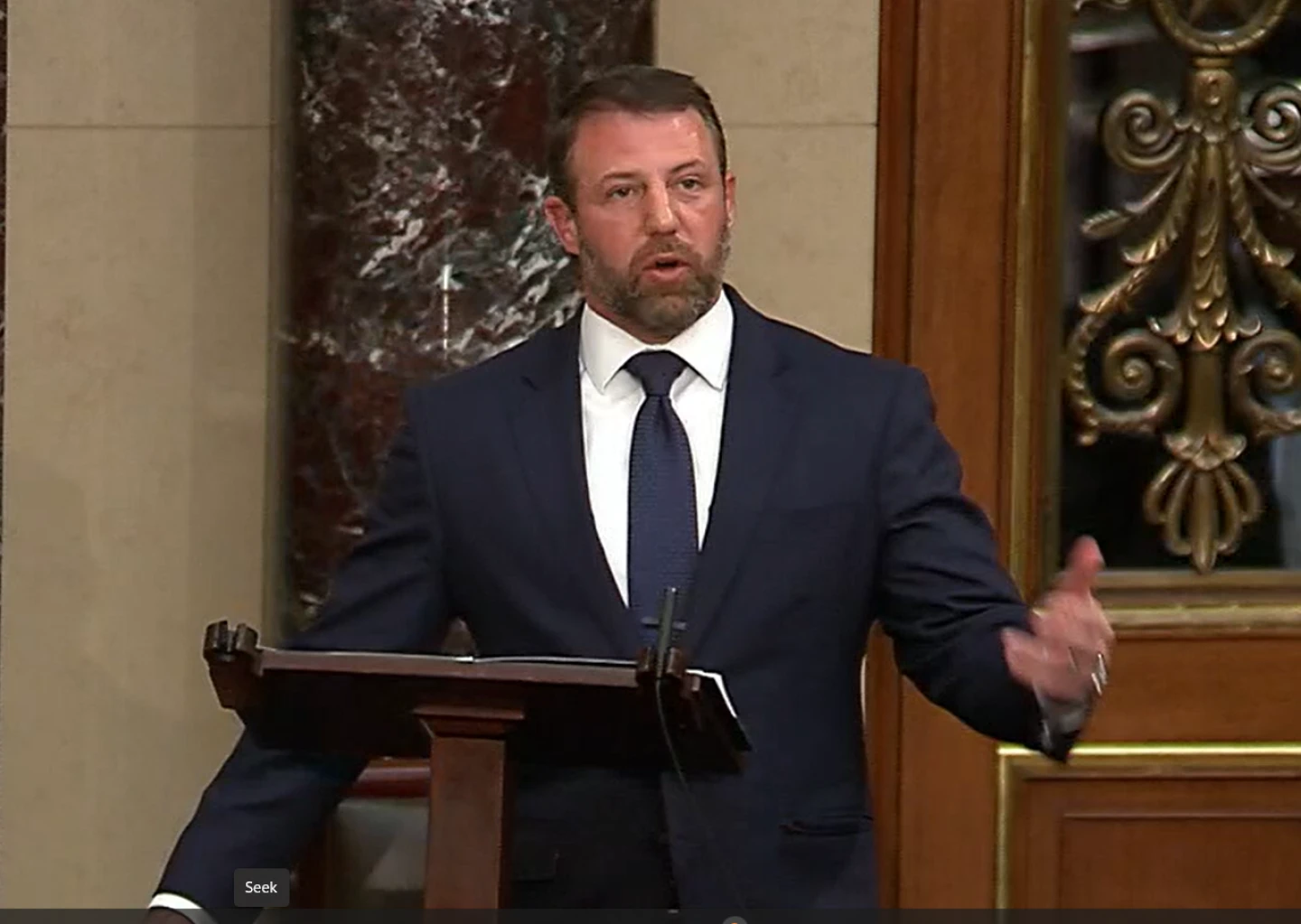
MULLIN: “Well, the Give Kids a Chance Act is something I’ve been working on for probably 11, 12 years. It all started with a young man out of Tahlequah, when we got introduced to the fact that there’s a lot of drugs that are available for adults that have a terminal illness, either from cancer or whatever it is, that’s not available for kids. And we figured out this is a huge issue, and the insurance companies didn’t want to take the liability on it, the federal government was having a hard time giving them the credit, you know, the cover, that they need. But, if you’re a parent and you have a kid that’s been diagnosed with a terminal illness and there’s an experimental drug that’s going through the clinical trials, and you can sign up if you’re 18, but you can’t sign up if you’re 17. You can sign up if you’re 18, the day you turn 18, but you can’t sign up if you’re six years old, or if you’re three years old, if you’re 12 years old. And I thought, why? I mean, what parent wouldn’t want one more day with their kid, or a year, or maybe a lifetime? And because of insurance, because of bureaucracy, they weren’t allowed to do it. And you would think that this would be an easy push, right? You’d be able to get it done. 11 years we’ve been working on this. And then when we finally had cleared all the hurdles — the pharmaceutical companies agreed with it, the regulatory body agreed with it, we finally got the committees to agree with it, we finally got it out of the House, we got it over to the Senate, we went to the floor to have a unanimous consent. I mean, who is going to possibly tell a parent, ‘No, you can’t have clinical drugs that’s through a study that might help your child live over one more day or maybe a lifetime.’ I would have thought no one would object to this. And would you believe it? The senator from Vermont, Bernie Sanders, stood up and objected to it, because he was holding it hostage for a Medicaid expansion bill that he wanted. And it was the first time I probably got emotional on the floor because I got very, very upset. And I’m a pretty passionate person, and I don’t ever come and talk about bills we passed, ever. I think this is the first time we’ve ever even talked about a bill we’ve ever got passed. But…but this was personal to me, because it’s personal to anybody that has kids. And, because he objected to it, we had to find another path forward. Through negotiations, working with the committee and working with the White House, they said, put it on the appropriations bill, we’ll let it go through on the appropriations bill. And, of course, Bernie didn’t vote for it, but it had enough people that wanted to vote for it to see it go through that it was finally signed, signed into law yesterday. So, now kids with terminal illness will have the same access as adults, because of a difference of a birthday, between 18 and 17, or 18 and six. I think this is going to be life-changing, or at least give a child or the parents a little extra hope, that their diagnosis isn’t a guarantee—that there may be opportunities, if you’re willing to go through some of these clinical studies. It opens up the accessibility for pediatric drugs, for adult drugs. All it was was they, was literally a birthday. The difference between being 18 and being 17. So, you’re 17, you’re considered, you know, under pediatric care … 18, you’re an adult. And, even though your blood type hasn’t changed, your disease hasn’t changed. The only thing that’s changed is your birth date. It can be an experimental drug for that terminal illness that an adult has, that a child has. The illness and the disease is the same. The difference was a birth date. I mean, it’s–you can’t make this stuff up. This is bureaucracy at its worst, right? If you think that–if you got diagnosed with terminal cancer, no matter what that cancer is, and there’s a clinical study for that drug, you should have availability to get it, if you want to sign up for it. But because of a birth date, because you’re considered a child, you couldn’t do it. But as an adult, you could… and there was a lot of lives that could have been saved, if they would have had access to the same drugs as an adult. And so all we’re saying is let’s give a chance. When we first started this 11, 12 years ago, there was a 164 cancer drugs available to adults, and there was less than ten available to kids … Think about that. And so that was this whole push. And as I said, you would think this would have been an easy ‘yeah, let’s get this thing fixed’.. It’s been a long, long push. We got it passed in the House, years ago, when I was in the House, but it got stuck in the Senate, and then we could never get it out of the Senate, so when we got in the Senate, we started pushing on it. It’s taken me four years in the Senate.”






