











STILLWATER, Okla. –
Firefighters often face dangerous conditions while battling flames, but researchers at Oklahoma State University say another serious threat often goes unseen.
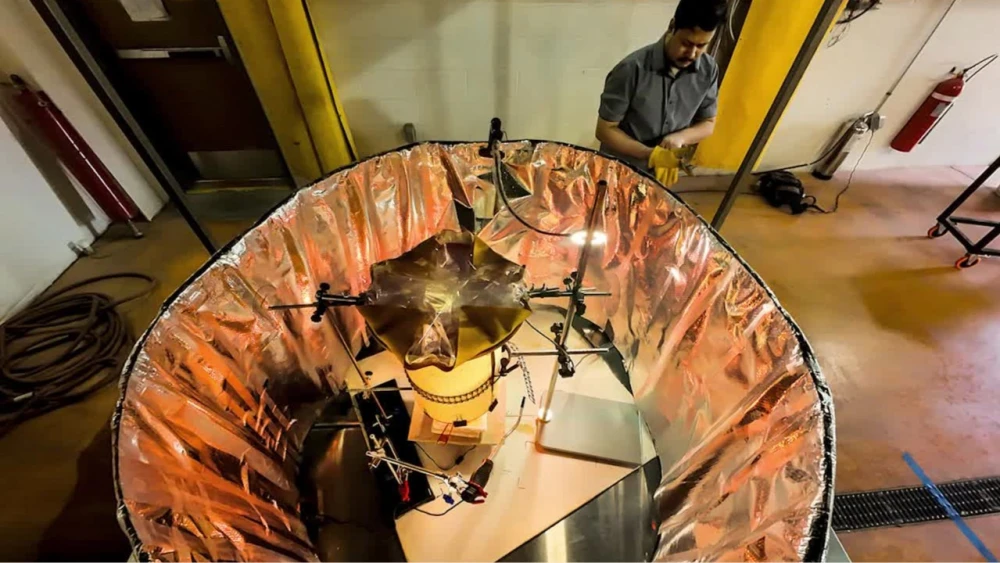
A team at OSU’s Textile and Apparel Science Laboratory is developing a new type of protective fabric designed to shield firefighters from tiny airborne particles linked to cancer. Researchers hope the technology will reduce long-term health risks while remaining breathable enough to keep firefighters from overheating.
Firefighters Face Elevated Skin Cancer Risk
According to Dr. Sumit Mandal, an associate professor in OSU’s Textile and Apparel Science Laboratory, firefighters face about a 58% higher risk of developing skin cancer.
While current firefighting gear provides strong protection against heat and flames, Mandal says it does not completely prevent microscopic airborne particles from reaching the skin during emergency responses.
Developing Smarter Protective Gear
T
According to Dr. Sumit Mandal, an associate professor in OSU’s Textile and Apparel Science Laboratory, firefighters face about a 58% higher risk of developing skin cancer.
While current firefighting gear provides strong protection against heat and flames, Mandal says it does not completely prevent microscopic airborne particles from reaching the skin during emergency responses.
Potential Benefits Beyond Firefighting
Researchers believe the technology could eventually be adapted for workers in other industries who are regularly exposed to hazardous airborne particles.
“The impact of this project is actually not only the firefighting, it goes beyond to other sectors, even those who are facing the airborne carcinogenic particles,” Mandal said.
The project is still in development, and the team at OSU estimates the technology could be ready within the next few years.









