











TULSA, Okla. –
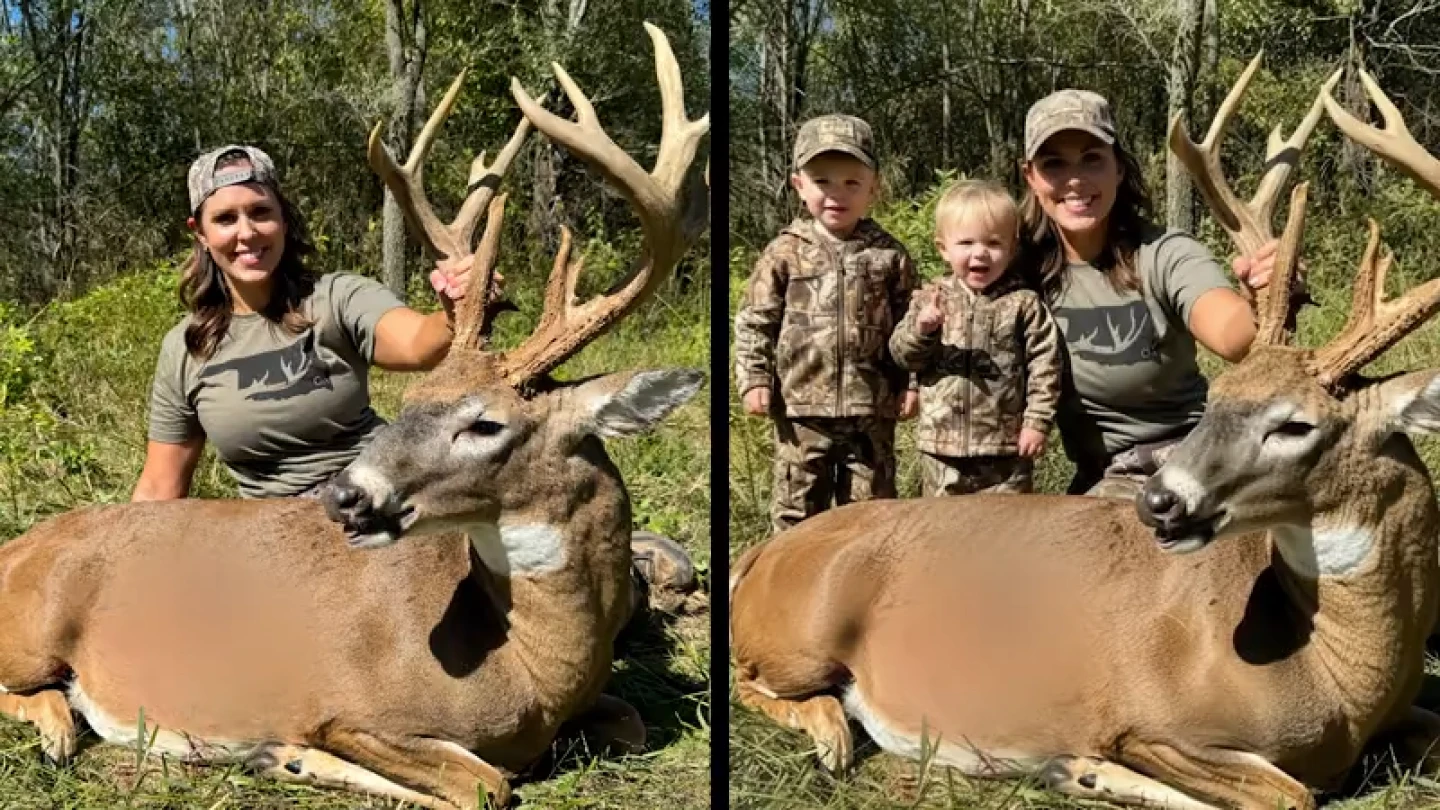
News On 6’s Tess Maune posted a photo to Instagram in October 2023 showing a deer she harvested during hunting season. Recently, Maune said a friend alerted her that the picture of her was altered by AI and appeared on a Facebook page.
A familiar photo, with a fabricated story
The Facebook page, called Alabama Empire Buck Outdoors, appears at first glance to be a legitimate outdoor brand. The altered image shows Maune alongside two boys, with her face digitally modified.
“That is a deer that I harvested two years ago, but those aren’t my kids, and there’s just something creepy about creating this fake family and this fake story,” Maune said.
When users click the page’s “shop now” button, it redirects to a business in Huntsville, Alabama.
The owner of that business said his Facebook page was hacked about a month ago. He said his logo was stolen, the page name was changed and repeated attempts to have the page removed by Facebook have so far been unsuccessful.
Until the page is taken down, Maune’s altered image remains online.
“You are kind of helpless,” Maune said. “I can’t get them to take this down. It’s there. They have taken my picture. They have created my fake family, and they have posted it, and I am helpless to get it taken down. If it were something more salacious, how vulnerable and how helpless you feel in that situation.”
“People think it’s real”
Maune said the manipulated image has gained attention.
“If you go and read the comments, and it has a lot of comments, a lot of engagement, and people think it’s real,” Maune said.
While Maune said the image itself is relatively harmless compared to other forms of AI manipulation, the experience has changed how she views sharing personal photos online.
“It’s a reminder to me of why I don’t want to share her picture, my daughter’s picture, on social media because there are pages like this and there are people out there who have bad intentions and they want to take your picture and manipulate it into something disgusting,” Maune said.
Experts say protection is limited
Dr. Yi Ting Chua, an assistant professor at the University of Tulsa, said protecting images online has become increasingly difficult as AI tools advance.
“Unfortunately, there’s not really a good set of advice for users nowadays just because the technology is changing so fast,” Chua said. “Any sort of detection mechanism that researchers are starting seems to be kind of playing a bit of catch-up.”
She also encouraged users to report suspicious content through social media platform support tools and to consider keeping content private.
“If you are just a normal user, doesn’t have a big online presence, just be aware of your settings that you are posting because oftentimes a default might be a public setting where anyone on the platform can see the post, which may be what you want for certain things but not all things,” Chua said.
Still, Chua said technology is evolving faster than detection methods.
“There’s no perfect advice right now,” Chua said. “The best thing users can do is pay attention and verify sources.”
Maune has reported the photo to Facebook, but the altered image remains visible.
“It starts with a harmless hunting picture,” Maune said. “And then what’s next?”






