











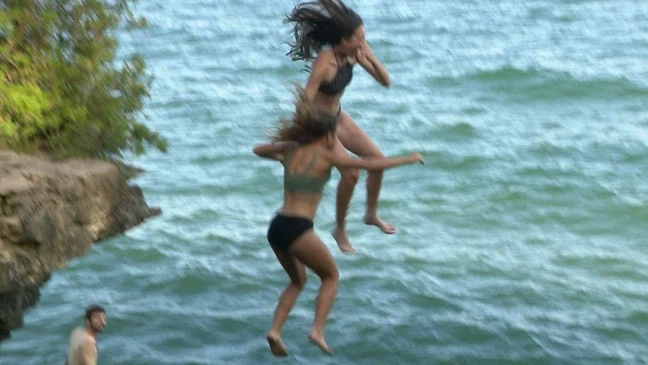
TULSA, Okla. — With summer temperatures climbing, state and local first responders are issuing an urgent warning about the hidden, often unpredictable dangers of cliff jumping into Oklahoma waterways.
While clips circulating on social media frequently portray the activity as an effortless summer thrill, officials emphasize that what looks safe on a screen can turn catastrophic in real life.
The warning follows recent reports of injuries and drownings that have already occurred across the state this year.
State authorities note the risk extends far beyond concussion or spinal trauma from impacting the water.
“Even if you are a strong swimmer…if you do [have an] underwater shock, your body’s natural reaction to cold water or even just the impact is to take a deep breath and inhale,” said Oklahoma Highway Patrol Trooper Keyton Davis. “Your body involuntarily will gasp and take on water.”
The physical environment of Oklahoma’s lakes and rivers presents its own set of dynamic hazards.
Heavy rain and localized flooding continuously alter underwater landscapes, meaning a location that was deep enough for a safe jump one day could hide dangerous obstructions the next.
According to the Tulsa Fire Department, the velocity of a jump amplifies the severity of any potential impact.
Jumping from an elevated ledge of just 20 feet sends a person into the water at roughly 25 miles per hour.
“At 20 feet if you jump, you’re moving at about 25 miles per hour when you hit the water,” said Tulsa Fire Department Public Information Officer Andy Little. “Even bad body positioning can potentially damage your spine and again, if there are floating objects, trees, other things in that water, it can potentially paralyze you.”
To mitigate these risks, fire officials urge lake goers who choose to swim to never consume alcohol, never swim alone and to always wear a life jacket.
Those safety warnings are echoed by regional water management authorities.
The Grand River Dam Authority issued a statement strongly discouraging cliff diving, highlighting particular concern for the unpredictable currents and shifting debris in the Illinois River.
GRDA officials also reminded the public that cliff jumping is strictly prohibited in designated areas across Oklahoma lakes, noting that individuals can face legal repercussions or trespassing charges if they attempt to jump from cliffs located on private property.
Since water levels fluctuate constantly overnight, a site deemed clear a week ago can quickly become an active hazard.
Faced with a high volume of unknown variables in open water, emergency personnel are asking thrill seekers to reconsider taking the leap entirely this season.
Davis said, “I would just say go to the diving board at a local pool or something like that if you really want to be a thrill seeker or do something that’s safer because the unknowns from cliff jumping are just way too abundant to go out there and try that.”









