











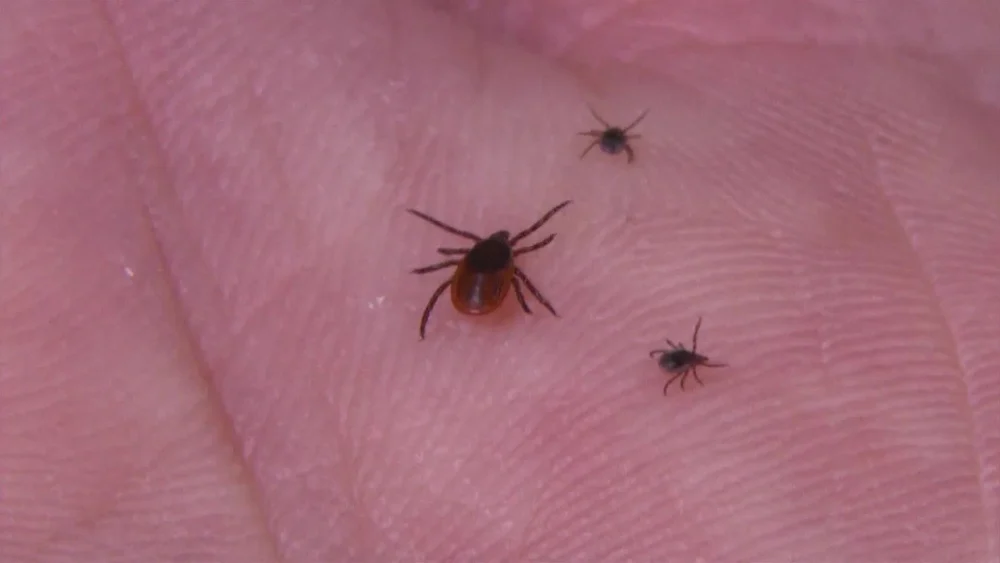
The Centers for Disease Control and Prevention says emergency room visits related to tick bites increased this spring as warmer weather brought more people outdoors.
New CDC data shows tick bite-related ER visits rose sharply between March and April, with April marking the peak month reported so far. The agency has not yet released data for May.
CDC sees spring increase in tick bites
The CDC says tick bite-related emergency room visits surged this spring, continuing a seasonal trend that typically begins during the warmer months.
Health officials say young children and older adults experience some of the highest rates of tick bites.
Illnesses linked to tick bites
Ticks can carry several illnesses, according to the Tulsa Health Department.
Mitzi Velazquez, an epidemiologist with the department, said diseases associated with ticks include Lyme disease, Alpha-gal syndrome and Rocky Mountain spotted fever.
“It’s not like being scared or not deciding to go outside. Just like we decide to prevent other illnesses by practicing these things day to day, we definitely want to emphasize prevention in these matters,” Velazquez said.
Prevention remains important
Health experts stress that a tick bite does not automatically mean someone will become sick.
Officials recommend taking preventive measures when spending time outdoors and performing regular tick checks during the spring and summer months.
The Tulsa Health Department hosts community events focused on prevention where it gives out insect repellent, tweezers, stroller nets and other supplies. For a schedule of THD events, click here.
The Tulsa Health Department also offers an epidemiologist help line for questions about tick bites and prevention. Call 918-595-4399 during business hours.
When to contact a healthcare provider
Experts say anyone who develops a rash, fever or flu-like symptoms after a tick bite should contact a healthcare provider.
The CDC says tick activity typically increases during the spring and summer, making awareness and prevention important throughout the season.









